Planning guide
How Many Designs Should a T-Shirt Bar Offer?
More designs feels generous and prints slower. Here is how to size a t-shirt bar menu around your actual line.
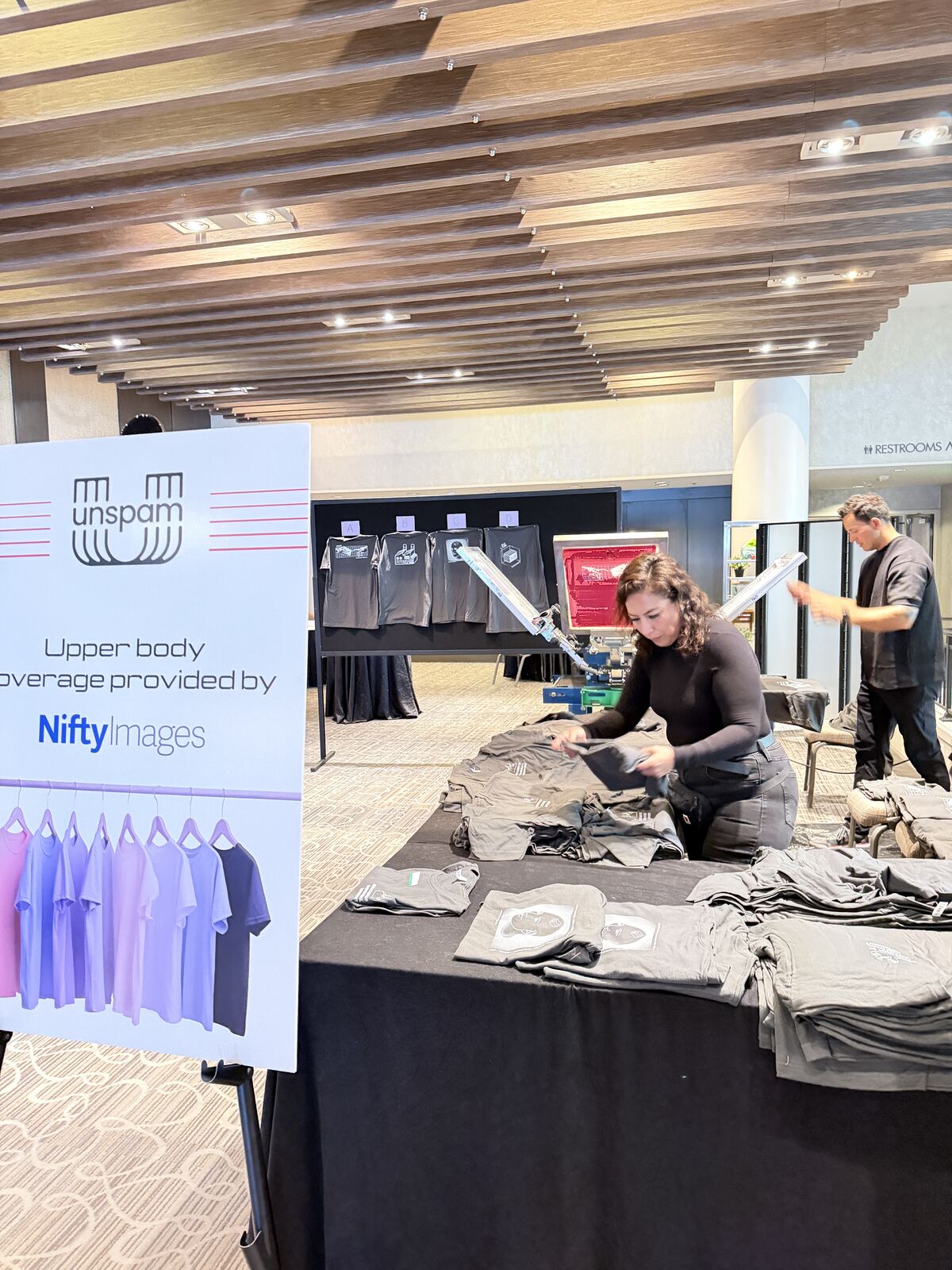
The most common mistake at a t-shirt bar is not the shirts, the press or the staffing. It is the menu. A planner who has spent three weeks on artwork wants to show all of it, so twelve designs go on the board, and by 7pm there is a twenty-minute line made almost entirely of people standing still, deciding.
Thinking about t-shirt bar design menu size is really thinking about queue math. Every option you add costs seconds per guest, and seconds per guest compound into a line that either feels like an attraction or feels like the DMV.
Where the seconds actually go
A DTF and heat press station realistically turns out 60–90 finished pieces per hour. Call it 75. That is roughly 48 seconds of station time per guest, and the press itself only accounts for a fraction of it. The rest is choosing a blank, choosing a size, choosing a design, confirming, and waiting for the handoff.
Now do the arithmetic on decisions. A guest facing three designs picks in about ten seconds. A guest facing six takes maybe twenty. A guest facing twelve, with a friend beside them offering opinions, can burn ninety seconds and still change their mind at the platen. You have not added variety at that point — you have added a bottleneck that no amount of extra staffing fixes, because the constraint is the guest, not the crew.
Six to eight, and here is why
For a standard two-to-four hour activation, put six to eight designs on the board. Below four, guests start to feel they were handed a uniform. Above ten, the line slows and the tail of your catalogue barely gets picked anyway — in practice, two or three designs take the large majority of the volume and the rest exist to make those feel like a choice.
Structure the eight rather than just picking eight. A menu that works looks roughly like this:
- Two hero designs — the clean logo lockup and the one everyone will photograph. These carry most of your volume.
- Two event-specific — date, city, tour stop, or the internal joke that only this room understands. These are what makes the shirt a souvenir.
- Two style plays — a vintage or distressed treatment and something graphic and loud, so the person who would never wear a logo has an option.
- One or two wildcards — a sponsor lockup, a mascot, a co-branded piece.
Then add a personalization layer on top: a name, a number, a city, a date. That single layer generates more perceived choice than four extra designs and costs you about eight seconds.
Count combinations, not designs
Planners count designs. Guests experience combinations. Eight designs, three ink colours and two placements is not eight options — it is forty-eight, and it will read as forty-eight on a board.
Multiply before you commit: designs × colourways × placements. Keep the product under about twelve visible combinations. The cleanest way to get there is to fix everything except the design itself. One placement, front centre. One colourway per design, already decided by whoever made the art. That leaves the guest with exactly one decision, and it is the interesting one.
Blank colour is the exception worth spending on. Two or three blank colours feel enormously generous to guests and cost the crew almost nothing, since the press settings do not change. If you want the menu to feel bigger, widen the blanks and narrow the designs — not the other way around. Our notes on choosing shirts and designs go deeper on blank selection.
Make the menu readable from six feet back
Half of your decision time is people squinting. Print the designs at actual size on a foam board or a pair of easels placed before the queue, not at the counter, so guests choose while they are waiting instead of when they arrive.
Number every design. A guest saying “four, in a medium” moves twice as fast as a guest pointing and saying “that one, the blue-ish one.” Number the sizes on a rail too. And hang one physical sample of each design on a body form — people who cannot picture how a print sits on a shirt will hesitate at the board for as long as you let them.
Scale to the crowd, and know what to cut
The variable is dwell time. A trade show booth should run three to four designs maximum — attendees are walking a floor on a schedule and a long line kills the aisle appeal that got them there. A wedding or private party can run four to six, since the guest count is fixed and everyone eventually gets one. A festival with an all-day footprint can carry eight to ten, because the crowd refreshes constantly and a visible line is an asset. A multi-day conference can rotate three designs a day, which gives people a reason to come back.
Hold one design in reserve whatever you land on. If a hero design misses, you swap it in at the break instead of watching the same shirt walk out for four hours.
Then decide in advance what gets cut when the queue exceeds about fifteen people: pull the two lowest-volume designs and switch to call-and-collect, taking the order and issuing a ticket at the front, handing the shirt over at a separate pickup point. That often does more for throughput than adding a press. What you should not cut is personalization — removing it mid-event is the one change guests notice and complain about.
Frequently asked questions
What is the ideal number of designs for a t-shirt bar?
Six to eight is the sweet spot for most events. That is enough that guests feel they chose something rather than were handed something, and few enough that the decision takes under a minute. Go to ten or twelve only if you have a long dwell-time crowd and a second press to absorb the slower line.
Should I offer multiple print placements?
Usually no, or at most two. Placement is the option guests care least about and the one that costs the most time, because it forces a second conversation and a second platen setup. Pick front-centre as standard, offer left chest as the only alternative, and let personalization carry the sense of choice instead.
Can we add designs on the day of the event?
It is possible with DTF because there is no screen to burn, but it is rarely a good idea. Artwork should be locked roughly ten business days out so film can be printed and test-pressed. Last-minute additions arrive untested and unproofed, and they are the ones that come out wrong.
Build the menu with us
Send us your guest count, your run time and whatever artwork you have, and we will tell you how many designs your line can absorb — usually fewer than you think, and it will run better for it. Start with our quote form or call (562) 614-4800. If you are still deciding on format, our planning guide covers staffing, power and layout.
Admit One book the bar
Tell us about the event once.
Share the date, city, headcount, and the vibe you want at the shirt bar. We come back with the right station size, crew, garment list, and a real quote — no generic price sheet.
Prefer to talk it through? Call (562) 614-4800.